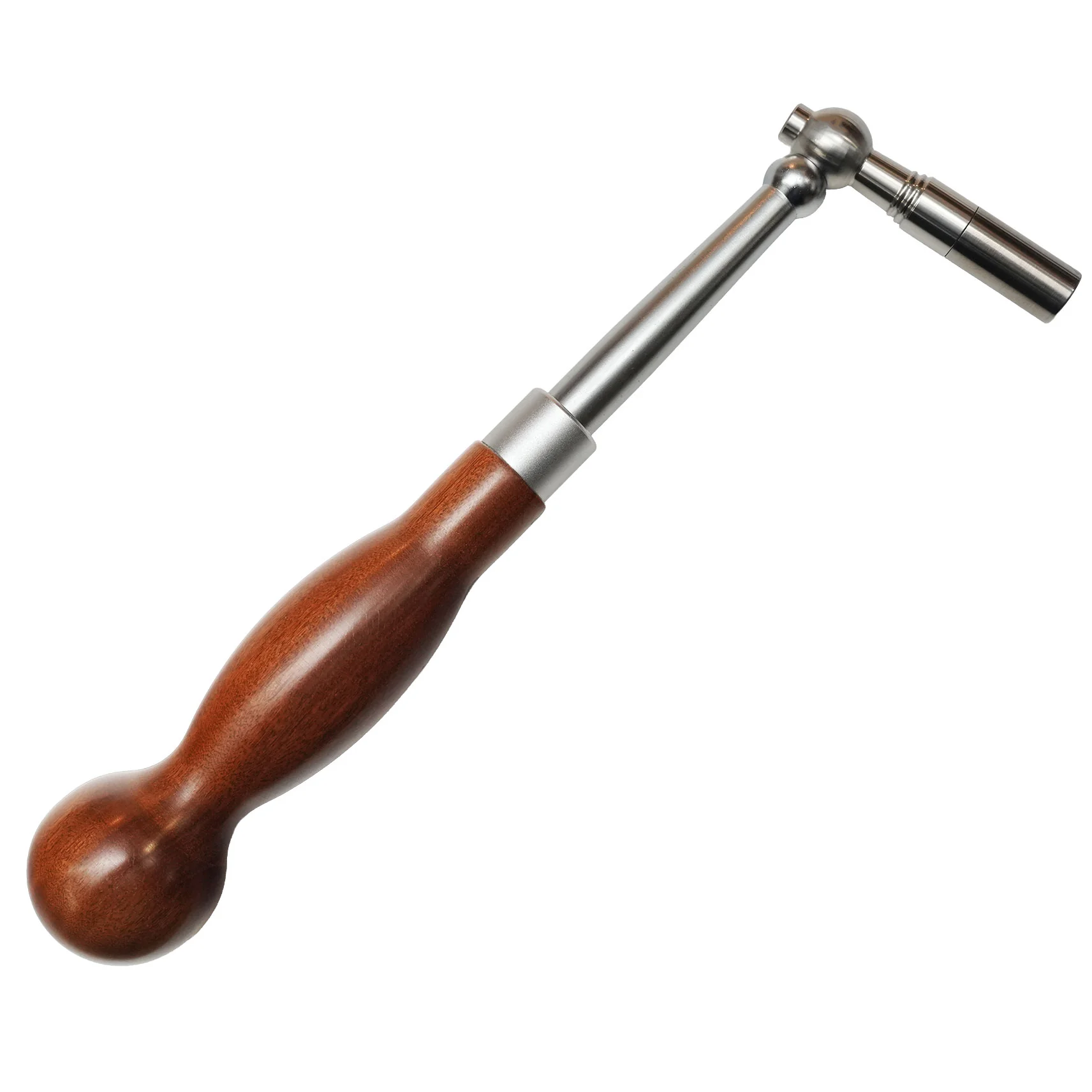
Ball Handle Rosewood Piano Tuning Lever
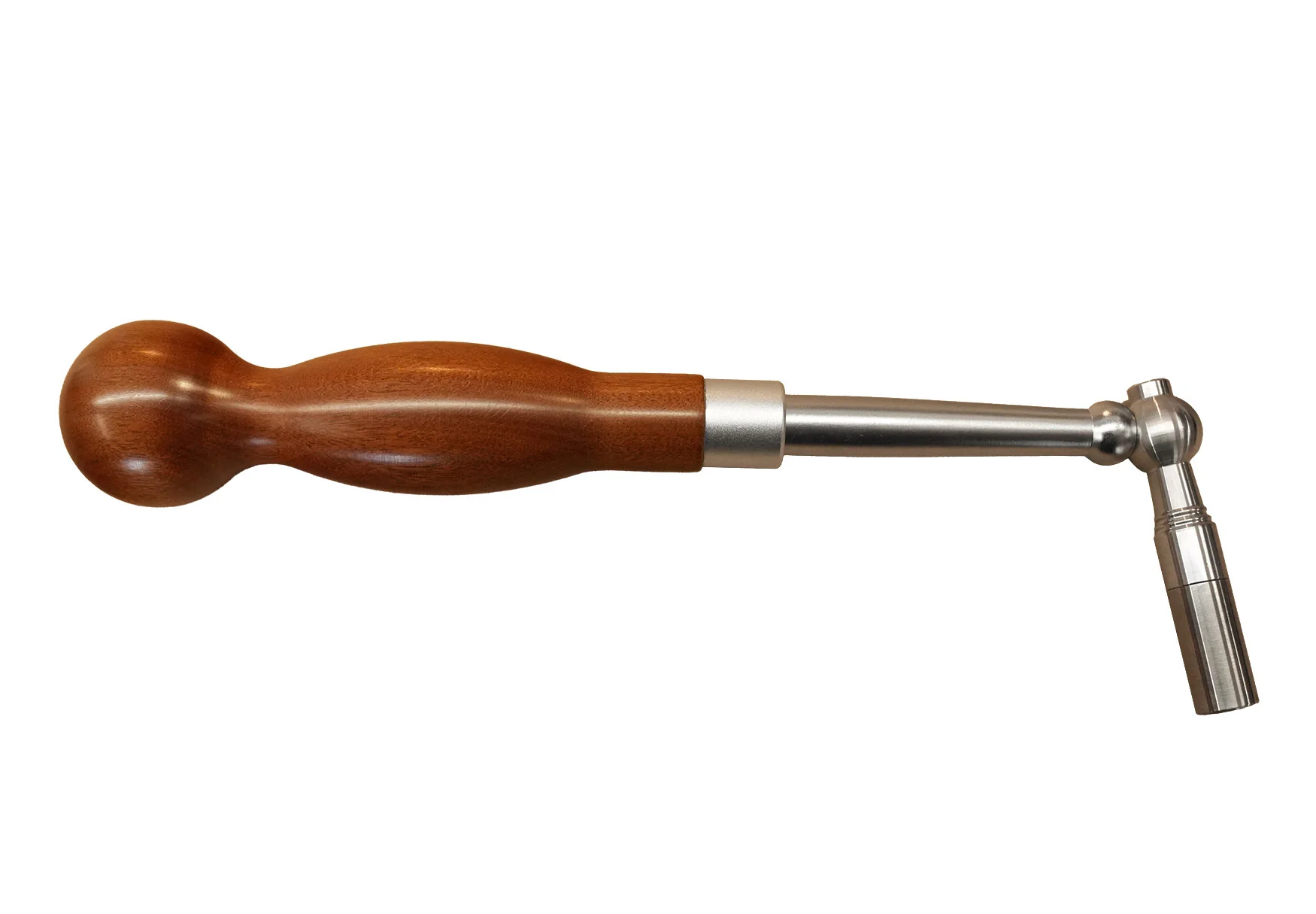
A ball-handle piano tuning lever for the serious home pianist, apprentice tuner, or technician who wants the wrist-fatigue reduction of a palm-grip ball end without the $275 price of the professional benchmark — the Ball Handle Rosewood features a 6-inch genuine rosewood handle with a 1.75-inch turned ball end, brushed satin steel shaft, and a fixed one-piece #2 star tip at 11 inches overall, shipping free within the continental U.S.
- 1.75-inch turned rosewood ball end functions as a palm rest and universal-joint grip point — the specific design feature that reduces wrist rotation and hand fatigue across a full tuning session.
- Two natural grip positions in one handle: cup the ball in the palm for controlled pin work, or choke up to the tapered waist for finer adjustments.
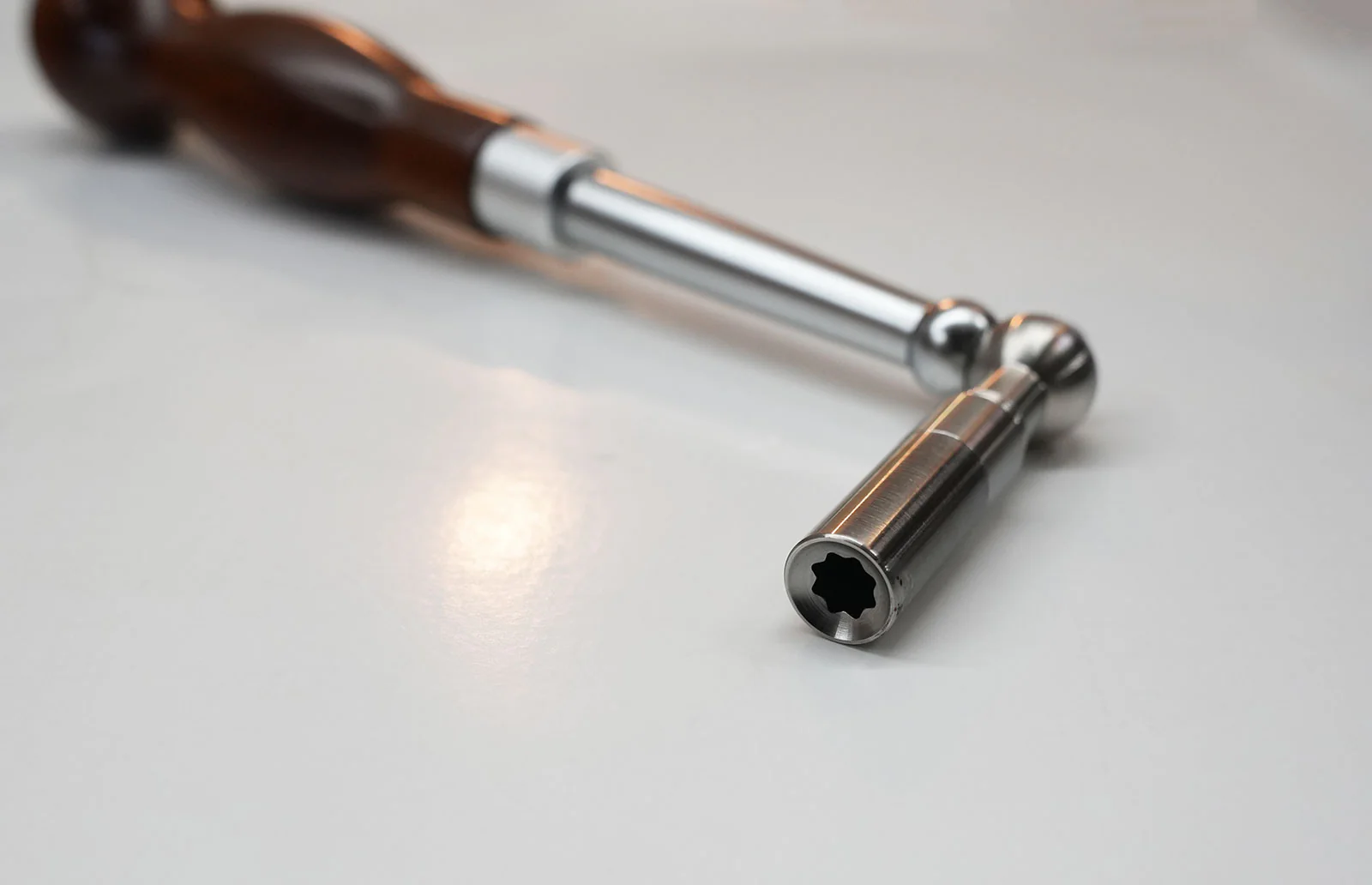
- Brushed satin steel shaft with fixed one-piece head and #2 star tip — no threaded joint at the point of maximum torque stress, nothing to loosen mid-session.
- 11-inch overall length with a 6-inch rosewood handle — the same overall length as the professional Watanabe ball-handle stationary lever at less than half the price.
- #2 star tip fits the tuning pins on virtually all modern pianos, including Yamaha, Kawai, Baldwin, and Steinway.
- The ergonomic step-up option in the Jansen tuning lever lineup — for buyers who tune regularly and want a handle designed around how the hand actually works under sustained torque.
- Free shipping, continental U.S. No sales tax on online orders.
What a Ball Handle Actually Does — and Why It Matters
A standard cylindrical tuning lever handle requires the tuner to reposition their grip as the lever angle changes from pin to pin across the piano. The average piano has over 230 tuning pins, and the square top of each pin is oriented at a slightly different angle — meaning the optimal handle position shifts with every pin. Over the course of a full tuning session, this constant grip repositioning translates into sustained wrist rotation and forearm muscle engagement that accumulates into fatigue. For technicians tuning multiple pianos in a day, it becomes a significant ergonomic load.
The ball end addresses this directly. The 1.75-inch turned rosewood ball sits in the palm like a universal joint: the palm cups the ball and remains relatively stationary while the fingers adjust their angle around it as the lever moves from pin to pin. The result, documented in professional tuning lever design literature and confirmed by working technicians, is a measurable reduction in wrist flexing and forearm rotation over a sustained tuning session. The ball is not a stylistic choice — it is the functional reason this handle design has been favored by professional piano technicians for decades.
Two Grip Positions, One Handle
The turned profile of the Ball Handle Rosewood — a generous ball end tapering to a narrower waist before widening slightly at the ferrule — creates two distinct and useful grip positions. Cupping the ball in the full palm gives maximum leverage and the universal-joint control described above, the preferred position for working through the mid and low registers where pins are tighter and require more torque. Choking up to grip the tapered waist gives a more precise, fingers-dominant grip with finer rotational control — useful in the treble register where pin movements are smaller and overshooting pitch is easier to do. Most straight-handle levers offer one effective grip position. The ball handle offers two without requiring a different tool.
The $105 vs. $275 Question — Who This Lever Is For
The professional benchmark for a ball-handle stationary tuning lever is the Watanabe, which sells for over $274.95. The Watanabe’s precision-machined tip system and Japanese manufacturing are genuine differences that working technicians who tune professionally every day can justify. The Ball Handle Rosewood is for a different buyer: the serious home pianist who tunes their own instrument regularly, the apprentice building a first serious toolkit, or the advancing hobbyist who has outgrown a straight-handle lever and wants the ergonomic advantages of a ball-end design without the full professional price. At $105.99, this lever delivers the core functional benefit — the ball-end palm grip and the wrist-fatigue reduction it provides — at a price that makes sense for buyers who are not servicing pianos professionally eight hours a day.
Where This Lever Fits in the Jansen Lineup
| Model | Handle Style | Best For | Price |
|---|---|---|---|
| Professional Piano Tuning Kit | Straight shaft, removable head | Beginners, home pianists, teachers, apprentices | $119.35 |
| Gooseneck Rosewood | Curved shaft, rosewood handle | Home pianists preferring curved access | $69.99 |
| Classic Rosewood | Straight shaft, cylindrical rosewood handle | Home pianists, teachers, apprentices | $89.00 |
| Ball Handle Rosewood (this lever) | Straight shaft, ball-end rosewood handle | Regular tuners wanting palm-grip ergonomics | $105.99 |
| Professional Rosewood — USA Made | Straight shaft, removable head | Working technicians | $239.00 |
Specifications
| Specification | Detail |
|---|---|
| Handle material | Genuine rosewood |
| Handle length | 6 inches |
| Ball end diameter | 1.75 inches |
| Shaft material | Brushed satin steel |
| Shaft style | Straight |
| Head angle | 5 degrees |
| Head-and-tip design | One piece (fixed — non-removable) |
| Tip size | #2 star tip (fits virtually all modern piano tuning pins) |
| Overall length | 11 inches |
| Weight | 15 oz |
| Extension | Non-extendable (stationary / fixed length) |
| Country of manufacture | Imported |
Free Shipping:
We are happy to offer free shipping to the continental United States for all piano tuning supplies. Alaska, Hawaii and international customers, please email for a shipping quote.
Product Information
Product Information
Shipping & Returns
Shipping & Returns
Description
A ball-handle piano tuning lever for the serious home pianist, apprentice tuner, or technician who wants the wrist-fatigue reduction of a palm-grip ball end without the $275 price of the professional benchmark — the Ball Handle Rosewood features a 6-inch genuine rosewood handle with a 1.75-inch turned ball end, brushed satin steel shaft, and a fixed one-piece #2 star tip at 11 inches overall, shipping free within the continental U.S.
- 1.75-inch turned rosewood ball end functions as a palm rest and universal-joint grip point — the specific design feature that reduces wrist rotation and hand fatigue across a full tuning session.
- Two natural grip positions in one handle: cup the ball in the palm for controlled pin work, or choke up to the tapered waist for finer adjustments.
- Brushed satin steel shaft with fixed one-piece head and #2 star tip — no threaded joint at the point of maximum torque stress, nothing to loosen mid-session.
- 11-inch overall length with a 6-inch rosewood handle — the same overall length as the professional Watanabe ball-handle stationary lever at less than half the price.
- #2 star tip fits the tuning pins on virtually all modern pianos, including Yamaha, Kawai, Baldwin, and Steinway.
- The ergonomic step-up option in the Jansen tuning lever lineup — for buyers who tune regularly and want a handle designed around how the hand actually works under sustained torque.
- Free shipping, continental U.S. No sales tax on online orders.
What a Ball Handle Actually Does — and Why It Matters
A standard cylindrical tuning lever handle requires the tuner to reposition their grip as the lever angle changes from pin to pin across the piano. The average piano has over 230 tuning pins, and the square top of each pin is oriented at a slightly different angle — meaning the optimal handle position shifts with every pin. Over the course of a full tuning session, this constant grip repositioning translates into sustained wrist rotation and forearm muscle engagement that accumulates into fatigue. For technicians tuning multiple pianos in a day, it becomes a significant ergonomic load.
The ball end addresses this directly. The 1.75-inch turned rosewood ball sits in the palm like a universal joint: the palm cups the ball and remains relatively stationary while the fingers adjust their angle around it as the lever moves from pin to pin. The result, documented in professional tuning lever design literature and confirmed by working technicians, is a measurable reduction in wrist flexing and forearm rotation over a sustained tuning session. The ball is not a stylistic choice — it is the functional reason this handle design has been favored by professional piano technicians for decades.
Two Grip Positions, One Handle
The turned profile of the Ball Handle Rosewood — a generous ball end tapering to a narrower waist before widening slightly at the ferrule — creates two distinct and useful grip positions. Cupping the ball in the full palm gives maximum leverage and the universal-joint control described above, the preferred position for working through the mid and low registers where pins are tighter and require more torque. Choking up to grip the tapered waist gives a more precise, fingers-dominant grip with finer rotational control — useful in the treble register where pin movements are smaller and overshooting pitch is easier to do. Most straight-handle levers offer one effective grip position. The ball handle offers two without requiring a different tool.
The $105 vs. $275 Question — Who This Lever Is For
The professional benchmark for a ball-handle stationary tuning lever is the Watanabe, which sells for over $274.95. The Watanabe’s precision-machined tip system and Japanese manufacturing are genuine differences that working technicians who tune professionally every day can justify. The Ball Handle Rosewood is for a different buyer: the serious home pianist who tunes their own instrument regularly, the apprentice building a first serious toolkit, or the advancing hobbyist who has outgrown a straight-handle lever and wants the ergonomic advantages of a ball-end design without the full professional price. At $105.99, this lever delivers the core functional benefit — the ball-end palm grip and the wrist-fatigue reduction it provides — at a price that makes sense for buyers who are not servicing pianos professionally eight hours a day.
Where This Lever Fits in the Jansen Lineup
| Model | Handle Style | Best For | Price |
|---|---|---|---|
| Professional Piano Tuning Kit | Straight shaft, removable head | Beginners, home pianists, teachers, apprentices | $119.35 |
| Gooseneck Rosewood | Curved shaft, rosewood handle | Home pianists preferring curved access | $69.99 |
| Classic Rosewood | Straight shaft, cylindrical rosewood handle | Home pianists, teachers, apprentices | $89.00 |
| Ball Handle Rosewood (this lever) | Straight shaft, ball-end rosewood handle | Regular tuners wanting palm-grip ergonomics | $105.99 |
| Professional Rosewood — USA Made | Straight shaft, removable head | Working technicians | $239.00 |
Specifications
| Specification | Detail |
|---|---|
| Handle material | Genuine rosewood |
| Handle length | 6 inches |
| Ball end diameter | 1.75 inches |
| Shaft material | Brushed satin steel |
| Shaft style | Straight |
| Head angle | 5 degrees |
| Head-and-tip design | One piece (fixed — non-removable) |
| Tip size | #2 star tip (fits virtually all modern piano tuning pins) |
| Overall length | 11 inches |
| Weight | 15 oz |
| Extension | Non-extendable (stationary / fixed length) |
| Country of manufacture | Imported |
Free Shipping:
We are happy to offer free shipping to the continental United States for all piano tuning supplies. Alaska, Hawaii and international customers, please email for a shipping quote.